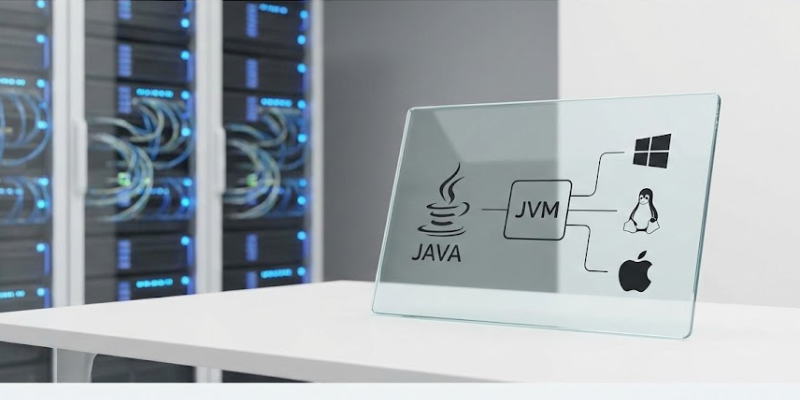
Many beginners hear the phrase “write once, run anywhere” and accept it without really understanding what it means in practice. The confusion usually appears when they see Java code running on different systems without change. This curiosity often comes up during Java Course in Trichy, where learners start asking why Java behaves differently from other languages tied closely to operating systems.
What platform independence really means
Platform independence means a program can run on different operating systems without rewriting the code. In Java, the same application can work on Windows, Linux, or macOS. Developers don’t adjust code for each system. This saves time and avoids errors caused by environment differences. For companies, it reduces development and maintenance effort. For learners, it builds confidence that their skills won’t be limited to one setup.
The role of bytecode in Java
Java source code doesn’t run directly on the operating system. Instead, it gets compiled into an intermediate form called bytecode. This bytecode is not specific to any machine. It acts as a common language that different systems can understand. Because of this extra step, Java avoids dependency on hardware or OS details that usually block portability.
How the Java Virtual Machine fits in
The Java Virtual Machine, or JVM, is the key piece that makes everything work. Each operating system has its own JVM implementation. The JVM reads bytecode and converts it into instructions the local system understands. This separation allows Java code to stay the same while the JVM handles the platform-specific work in the background.
Why developers trust this approach
Developers rely on this model because it removes uncertainty. When code runs inside a JVM, behavior stays predictable across systems. Memory handling, exception handling, and execution rules follow the same structure. People who also explore Python Course in Trichy often compare this with Python, where environment differences sometimes cause unexpected behavior. Java’s structure feels stricter but safer in large systems.
Libraries that hide system differences
Java provides standard libraries that manage tasks like file handling, networking, and threading. These libraries work the same way everywhere. Developers don’t need to worry about system calls or OS-level changes. The JVM and libraries together create a stable layer that shields the application from platform details, making Java suitable for enterprise software.
Platform independence in real job roles
In real projects, applications are deployed across multiple environments. Teams test on one system and deploy on another. Employers value Java developers who understand why this works. Interviews for Java Course in Erode often include questions about JVM behavior and deployment scenarios. Clear answers show practical understanding rather than textbook knowledge.
Limits developers should still know
Java’s platform independence is strong, but not absolute. Native libraries and system-level integrations can break portability if used carelessly. Experienced developers know when to rely on pure Java and when to handle platform-specific needs separately. This awareness helps avoid surprises during deployment and scaling.
Java’s design choice created long-term stability for developers. Understanding this concept helps learners explain their decisions confidently in interviews. As developers grow and branch into multi-language or cloud roles, skills built alongside Python Course in Erode complement Java knowledge, making them adaptable in modern, cross-platform development environments.
Also Check: Why Pointers are not used in Java?